Three of these seven change what we say on the phone before we get anywhere near scheduling. Jarred Mason, who owns the shop and still runs the floor:
“Gas, hot plastic, exhaust in the cabin. If somebody describes one of those on the phone, I’m not scheduling them. I’m telling them not to drive it here.”
So: strong raw gasoline, hot electrical or burning plastic, and exhaust inside the cabin. Everything else on this page can wait for an appointment, and two of them will not cost you anything at all.
We are leading with that because most of what is written about car smells is a list, and a list treats seven things as seven equals. They are not equals. Your nose is better early-warning equipment than your dashboard, a warning light needs a sensor to notice something, and a smell does not, but the value of that head start disappears if you don’t know which ones matter.
Where it points: a leaking fuel injector seal, a cracked or aging fuel line, a failed purge valve in the evaporative emissions system, or a gas cap that has stopped sealing. On older vehicles, a rusted filler neck.
A faint whiff for a minute after you fill up is normal. A smell you notice while driving, or that greets you when you open the garage door, is not.
The hazard here is not usually the leak. It is fuel vapor collecting in an enclosed garage overnight. Park outside and call us, and note that this is one of the two that sometimes costs nothing, because a gas cap is a part you can hold in your hand and can fix on your own.
Where it points: an electrical fault. A blower motor drawing too much current, a chafed wire shorting against metal, an overloaded circuit, or an accessory wired into the wrong place. Sometimes it arrives with a fuse that keeps blowing, or with something electrical working only intermittently.
This is the one smell where waiting has no upside at all. It is also the hardest thing on this page to trace, precisely because the damage is somewhere you cannot see, and that combination is why we would rather have the vehicle towed than driven.
Where it points: a leak in the exhaust system ahead of the tailpipe, or a body seal letting fumes into the cabin.
Every other item on this page is about your vehicle. This one is about the people in it. Windows open, and do not wait for a convenient appointment.
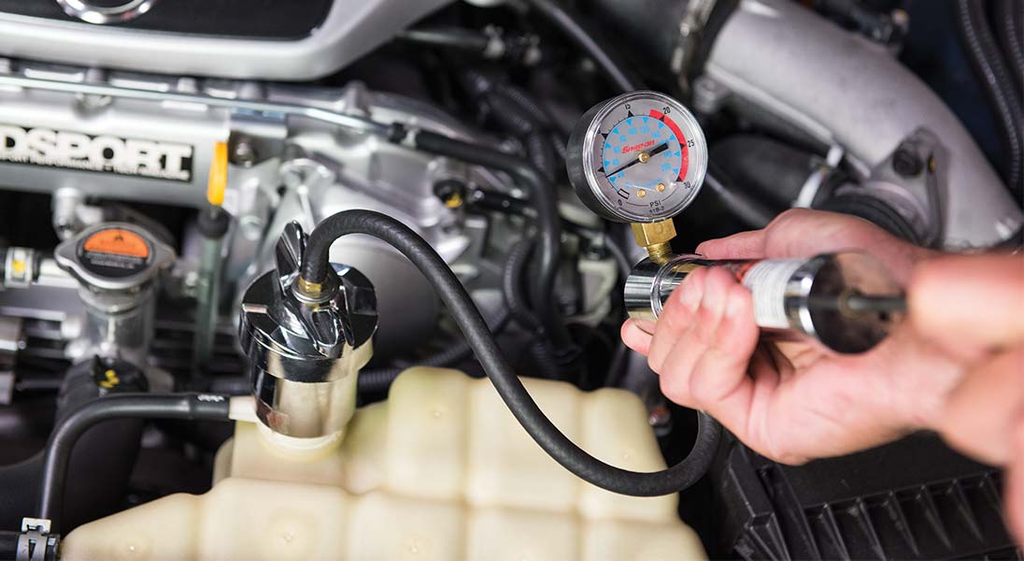
Where it points: engine coolant, every time. The sweetness is the giveaway. Usually a hose, the radiator, a water pump seal or the heater core, and if it is strongest inside the cabin with the fan on, the heater core is the first suspect.
This one has a condition attached rather than a verdict. A slow coolant leak is a repair you can schedule. Losing enough coolant is an engine problem, and the distance between the two is shorter than most drivers expect. If the temperature gauge is climbing, it joins the first three.
Where it points: most often the catalytic converter, which stops processing sulfur compounds properly when the engine runs rich (too much fuel being pumped at once) or the converter is failing. The second source is a battery venting because it is being overcharged: sharper smelling, and strongest with the hood up.
Worth separating, because one is an emissions repair and the other is a charging system fault that leaves you in a parking lot. If it comes with a check engine light, say so when you book. The codes usually name which of the two you have.
Where it points: something rubber touching something it should not, or a belt slipping. A worn serpentine belt, a coolant hose resting against a pulley or exhaust pipe, or a brake dragging on one wheel.
The brake version you can check yourself before you call. After a short drive, hold your hand near each wheel without touching it. One wheel noticeably hotter than the other three means a caliper is not releasing. A dragging brake wears that pad down quickly and overheats the fluid on that corner, so it earns a prompt appointment rather than a note for next time.
Where it points: moisture and organic debris in the ventilation system. Usually a loaded cabin air filter. sometimes biological growth on the evaporator core, occasionally a clogged AC drain leaving standing water in the housing.
This is the most common smell on the list, the least serious, and the second of the two that costs you nothing at our end. On most vehicles the cabin air filter drops out from behind the glovebox in five minutes or less, and the filter runs $15 to $40. We will tell you that instead of booking it.
Nothing about your vehicle is at risk. The air you breathe in it is a different question, which is the only reason to bother at all.
Cigarette smoke. A spilled drink under a seat. A wet floor mat. Something forgotten in the trunk after a weekend.
Those are cleaning jobs, and an interior detailer will handle them better than we will. Ozone treatment and upholstery extraction are not services we offer, and we would rather say that on a public page than take the appointment and disappoint you at pickup.
The line between the two is the fan. If the smell changes when you turn the blower on, or when you switch from recirculate to fresh air, it is coming through the ventilation system and it is worth having us look. If it is there with the fan off and the engine cold, start with a thorough cleaning.
The same three buckets we use at the service desk:
• Stop driving: strong raw gasoline · hot electrical or burning plastic · exhaust fumes inside the cabin · sweet coolant smell with a rising temperature guage
• Schedule it soon: sulfur or rotten eggs · burning rubber · sweet coolant smell with normal temperatures · burning oil with a visible drip
• Mention it at your next visit: musty vents · a faint burning-oil smell with a stable oil level
Worth including because it sits on a line the other seven do not. Oil escaping onto something hot, usually the exhaust manifold, from a valve cover gasket, a leaking sensor seal, or oil spilled during a previous service that never fully burned off. Hot and acrid, often strongest after you park and heat soaks upward.
A seeping gasket on a higher-mileage engine is frequently a monitor-it item, and we will say so. A leak actually dripping onto hot exhaust is a fire risk. Same smell, two different answers, which is why we ask you to check your oil level before we decide anything over the phone.
A smell is a symptom, not a diagnosis. We work it as evidence: scan for stored codes, pressure test where necessary, use dye and UV light on suspected fluid leaks, and check the electrical side for heat damage.
Which means the answer to the question we get most often: Can you find it if it is not happening when I drop it off? Usually yes. Smells leave residue on a hose, a stain on the manifold, dye in the coolant, a fuse with heat damage. Tell your service advisor when it happens and what you were doing, and that narrows where we look.
Over 300 Google reviews and 79 verified CARFAX reviews, the theme our customers raise most often is honesty, and close behind it is being told plainly what needed doing and what could wait. A smell is a good test of that, because two of the seven answers on this page cost the customer nothing and one of them sends the work to somebody else.
Raw fuel is escaping somewhere: an injector seal, a fuel line, an evaporative emissions purge valve, or a gas cap that is not sealing. Faint and brief after fueling can be normal. Anything more should be inspected before you park in a garage again.
Fuel vapor is being drawn in through the fresh air intake, which usually puts the source forward of the cabin, the engine bay, or a line running under the vehicle. Windows down, and get it in.
Usually the catalytic converter, sometimes a battery venting from overcharging. Stored codes and a look under the hood separate the two quickly.
A leak in the exhaust ahead of the tailpipe, or a body seal letting fumes in. Treat it as urgent and drive with the windows open. This is the one smell on this page that affects the people in the vehicle directly.
Sometimes. Packed debris against hot exhaust burns off and smells for a day or two. If it is still there after that, or if you smell it with the vehicle parked, have it checked.
Three things: what does it smell like in everyday words, when do you notice it, and does it change with the fan on. That is a call we take regularly from parents several hours away, and those three answers are usually enough for us to tell you whether they should drive it here.
Yes. Two of the seven smells above are things you can resolve without us, and they are on this page for that reason.
Our technicians are ASE-certified and knowledgeable across domestic and import work, with Ford Master Technician credentials, Subaru factory training and GM AC-Delco certification. Every visit includes a complimentary CarFax report, and the work is backed by a 2-year, 24,000-mile nationwide warranty.
You get fair pricing and a local shop your neighbors already recommend. We are at 2111 S Yost Ave, Monday through Friday, 8 to 5, with after-hours drop-off and pickup, which matters when the thing worrying you is a smell you would rather not drive around with.
Ready when you are. Book online in under two minutes